

Recent Services
- Advance Reproductive Technique (ART)
- Antenatal Checkup
- Azoospermia
- Complete Fertility Management
- Hypogonadism
- Hysteroscopy
- ICSI
- IUI
- IVF
- Laparoscopy
- Mens Health Clinic
- Oligozoospermia
- Ovulation Induction & Monitoring
- PCOD Management
- Recurrent Miscarriage Clinic
- Sexual Dysfunction
- Surgical Sperm Retrival
- TESA/TESE (Surgical Sperm Retrieval)
- Thyroid Management
- Timed Intercourse (Timed Relation)
- Tubectomy Reversal
- Varicocele
Schedule Hours
Contact Us
📞 +91 62645 65608
📞 +91 83196 33814
✉️ ashish32257@gmail.com
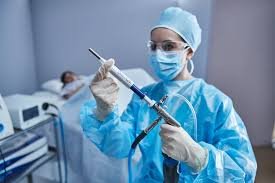
Hysteroscopy is a minimally invasive procedure used to examine the inside of the uterus. A thin, lighted telescope-like device called a hysteroscope is inserted through the vagina and cervix into the uterus, requiring no external incisions. This procedure allows doctors to diagnose and treat causes of abnormal bleeding, recurrent miscarriages, and infertility. It is a highly effective method for detecting uterine abnormalities such as polyps, fibroids, adhesions (scar tissue), and septums that may hinder pregnancy.
Diagnostic and Operative Hysteroscopy
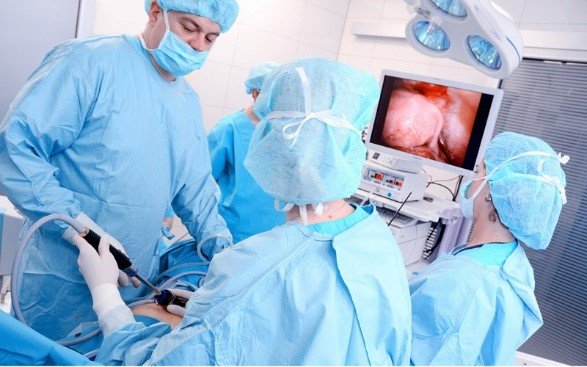
Hysteroscopy can be either diagnostic or operative. Diagnostic hysteroscopy is used to confirm uterine conditions, often before fertility treatments like IVF. Operative hysteroscopy involves correcting these conditions during the same procedure. For instance, if polyps or fibroids are detected, they can be removed immediately using specialized instruments. This "see and treat" approach minimizes the need for multiple surgeries, reduces recovery time, and significantly improves the environment for embryo implantation.
Enhancing Fertility with Precision
A healthy uterine cavity is essential for a successful pregnancy. Hysteroscopy provides a clear view and precise treatment of uterine issues that ultrasound might miss. By restoring the uterine cavity to its optimal state, we improve the chances of natural conception and the success rates of assisted reproductive technologies.
Why Choose Us?
We use advanced endoscopic technology to ensure safe, painless, and effective fertility solutions.